
Transform Chaotic Apparel Floors into High Performing Visual Workplaces
Cent Edge’s structured 5S methodology eliminates shop-floor clutter, recovers up to 25% floor space, creates 'search free' work environment, improved machine uptime and builds lasting operational discipline.
Floor Space Unlocked
Eliminate obsolete racks, dead stock, and line clutter without building new sheds.
Tool & Trim Access Time
Color-coded visual staging ensures operators find trims, folders, and guides in seconds.
Fewer Lint Breakdowns
Autonomous cleaning and inspection routines stop lint choke and broken needle stops.
Audit Sustenance Score
Structured 5S red tag audits and visual scorecards prevent backsliding into chaos.
Where Unorganized Apparel Floors Bleed Margins
Small shop-floor inefficiencies compound across hundreds of sewing machines into massive lost hours, fabric rejection, and buyer audit failures.
 01
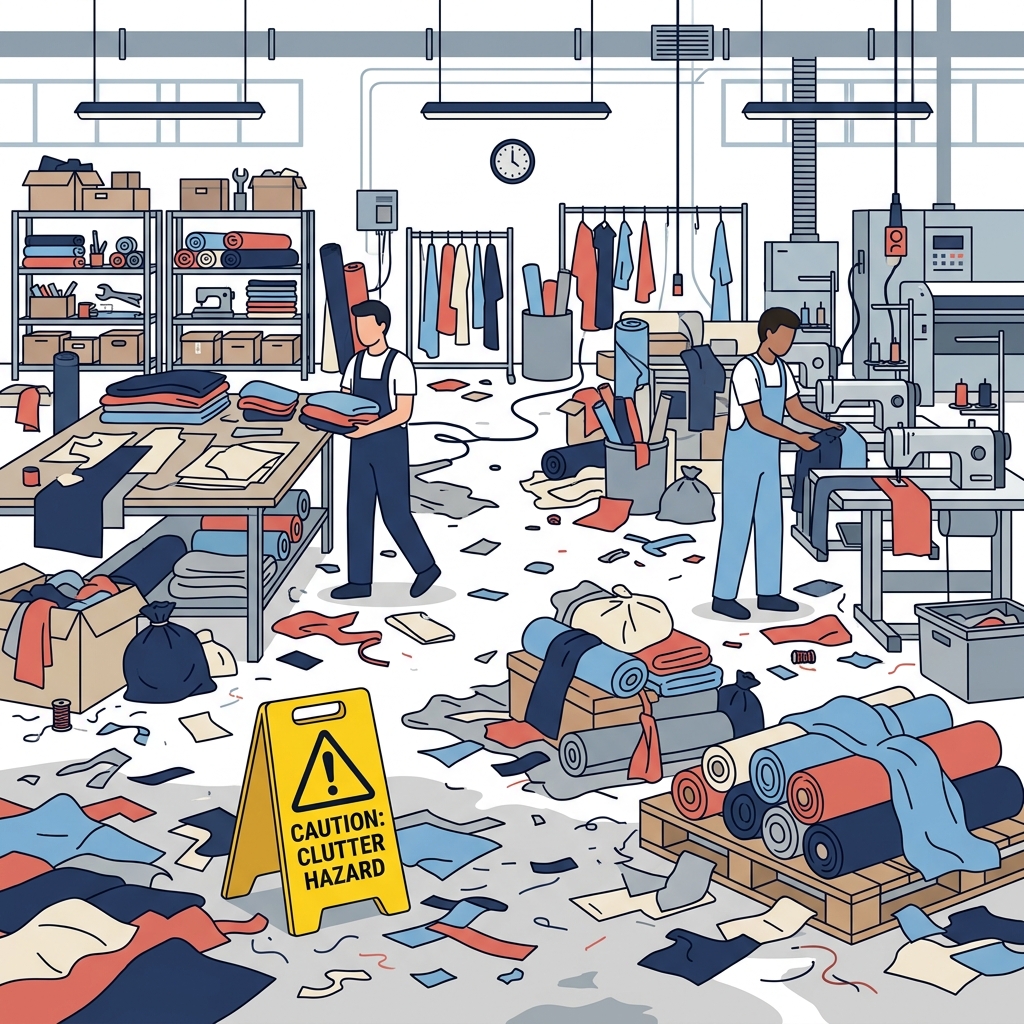
01Cluttered Aisles & Fabric Scrap
Fabric scraps, trims, and pallets spill into gangways, restricting bundle movement, causing tripping risks, and creating a chaotic audit impression.
 02
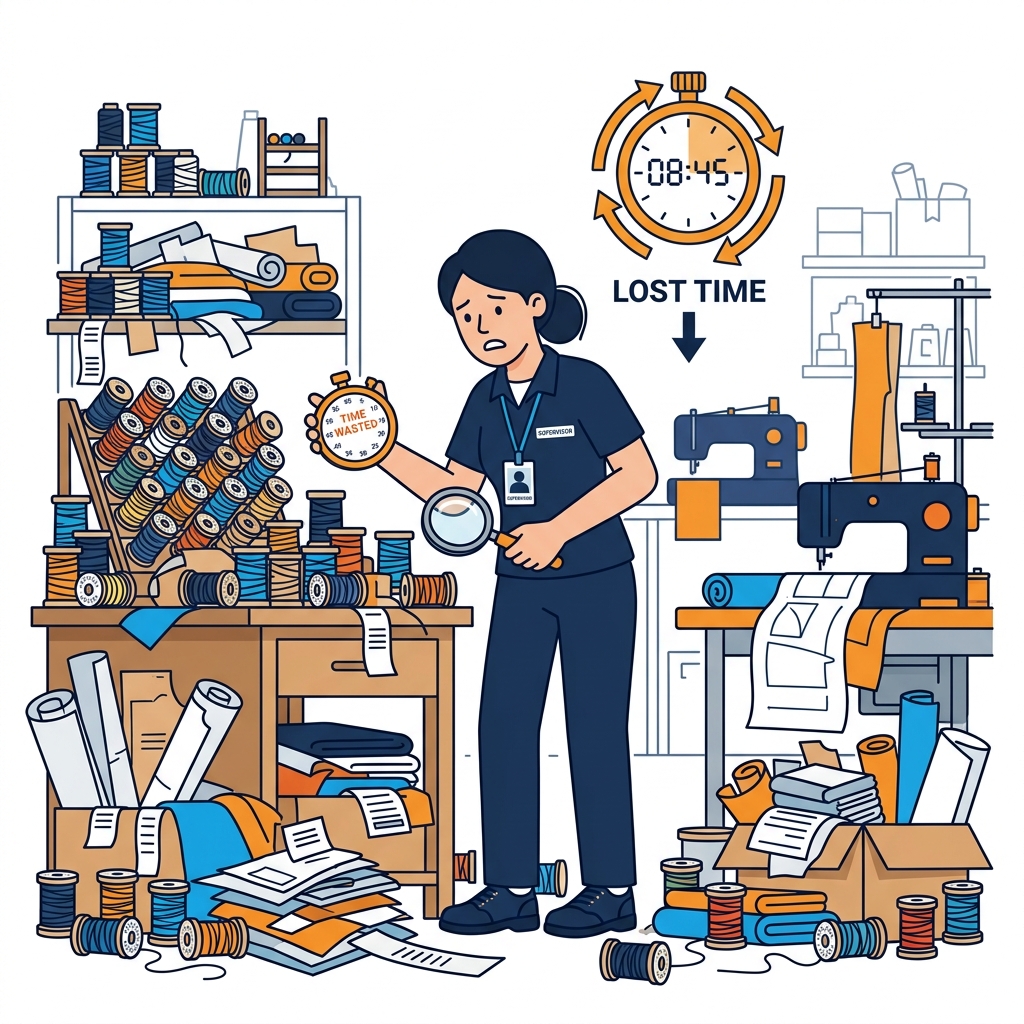
0215–20 Min Search Waste Daily
Operators and mechanics wander the shop floor looking for scissors, gauges, thread spools, size stickers, and work orders.
 03
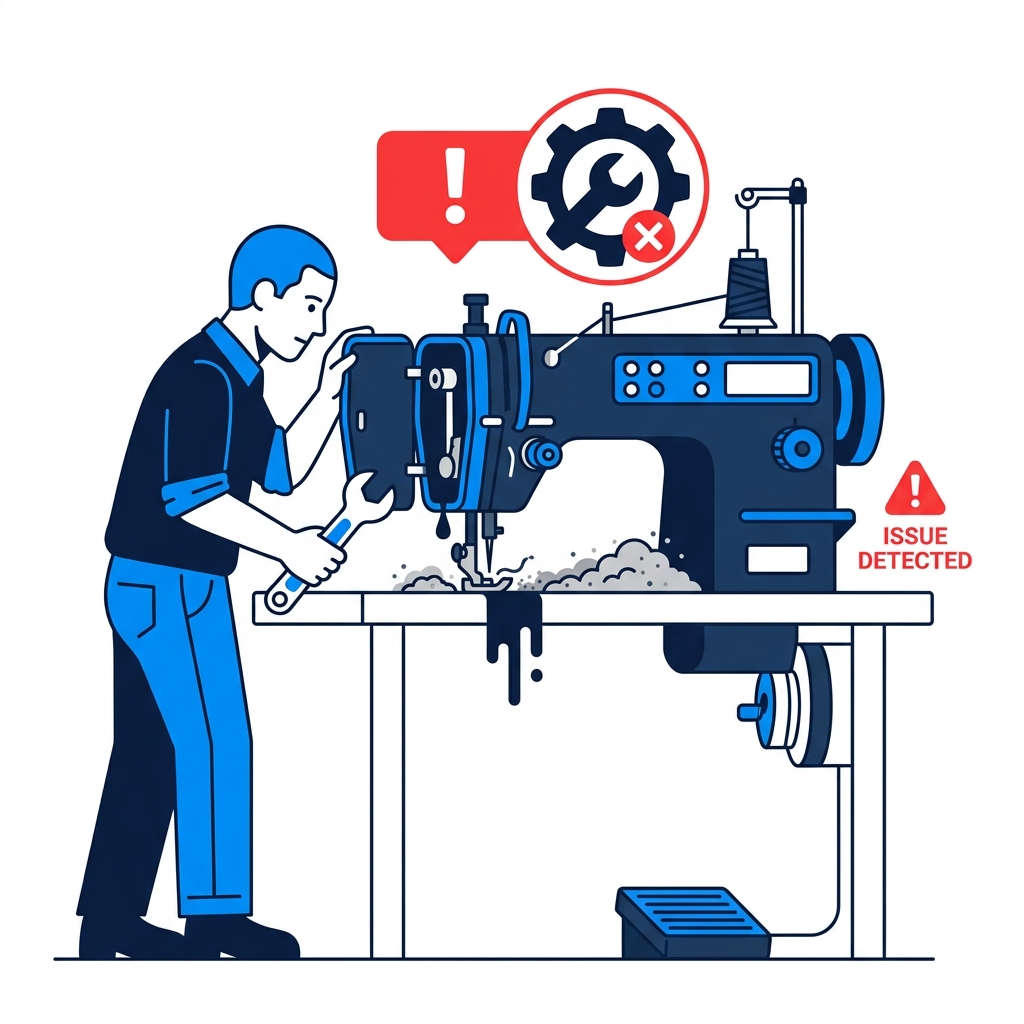
03Lint Build-up & Breakdowns
Without regular cleaning routines, fabric lint chokes machine mechanisms, causing oil staining on garments, skipped stitches, and line halts.
 04
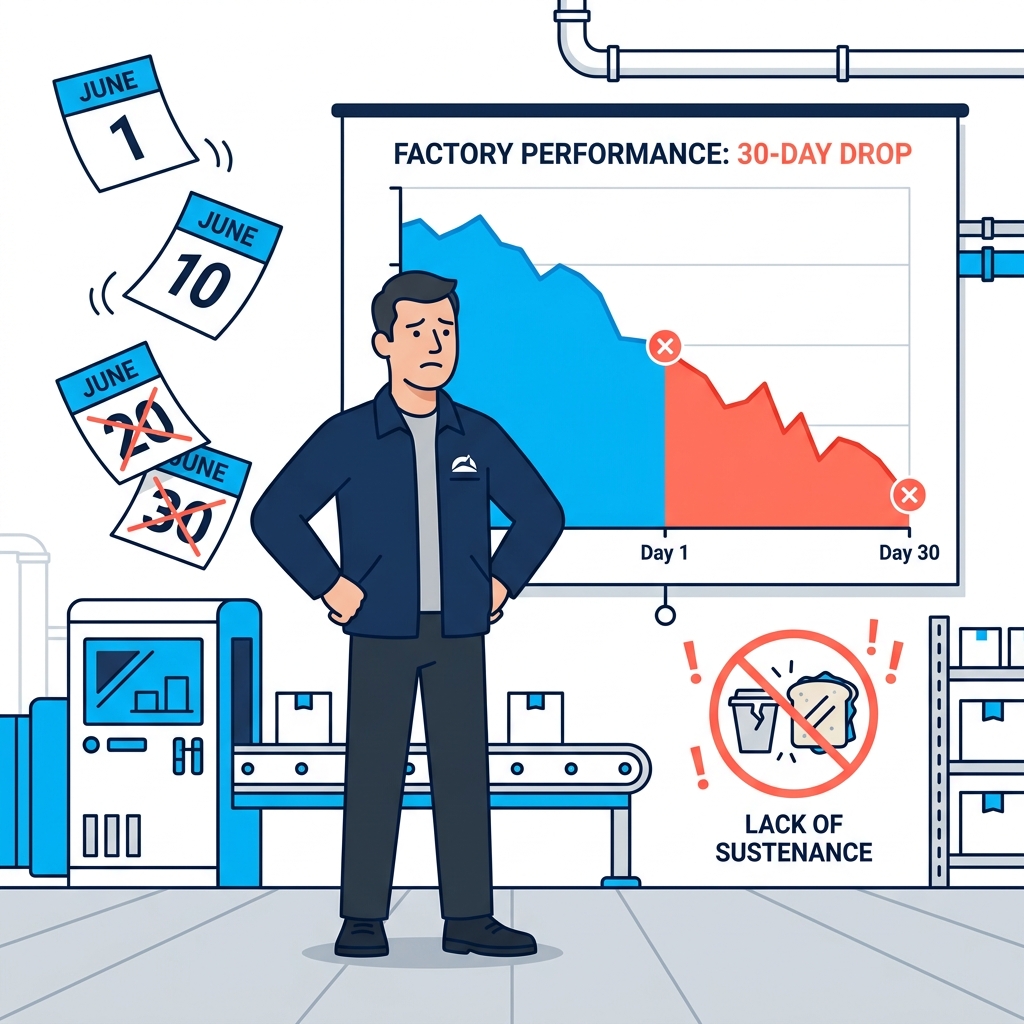
04Relapsing Within 30 Days
Most 5S efforts are treated as one-off housekeeping drives. Without daily visual controls and Gemba rhythms, old messy habits quickly return.
The 5 Disciplines Built for Garment Manufacturing
Every step is customized for the high-velocity demands of apparel cutting, sewing, finishing, and warehouse operations.
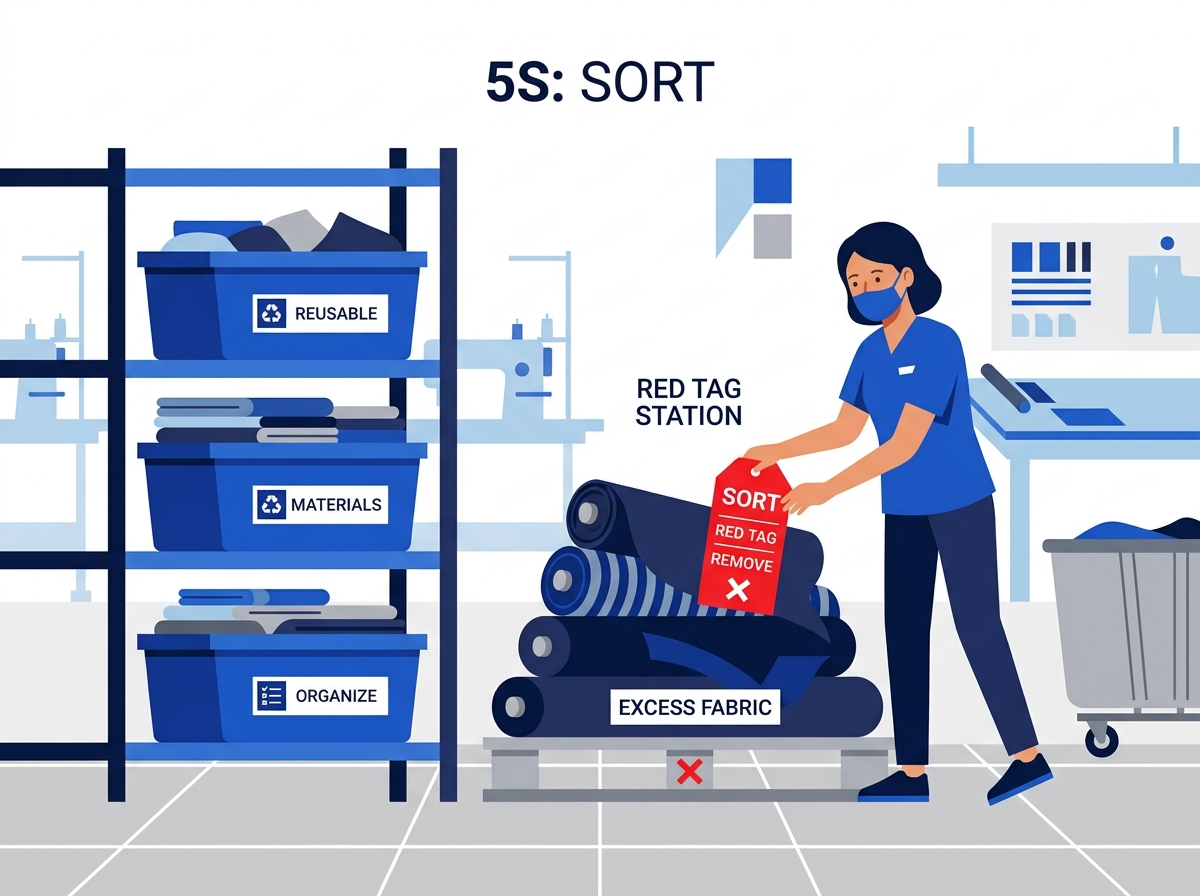
Eliminate Clutter & Reclaim Valuable Square Footage
Differentiating between what is needed right now and what belongs in storage or scrap.
- Red Tag Strategy: Fast tagging of obsolete fabric bundles, dead trims, and broken machine parts.
- Holding Area Protocols: Structured 48-hour quarantine zone for disposition and asset recovery.
- Immediate Space Recovery: Unlocks 15–25% floor space for additional lines or buffer staging.
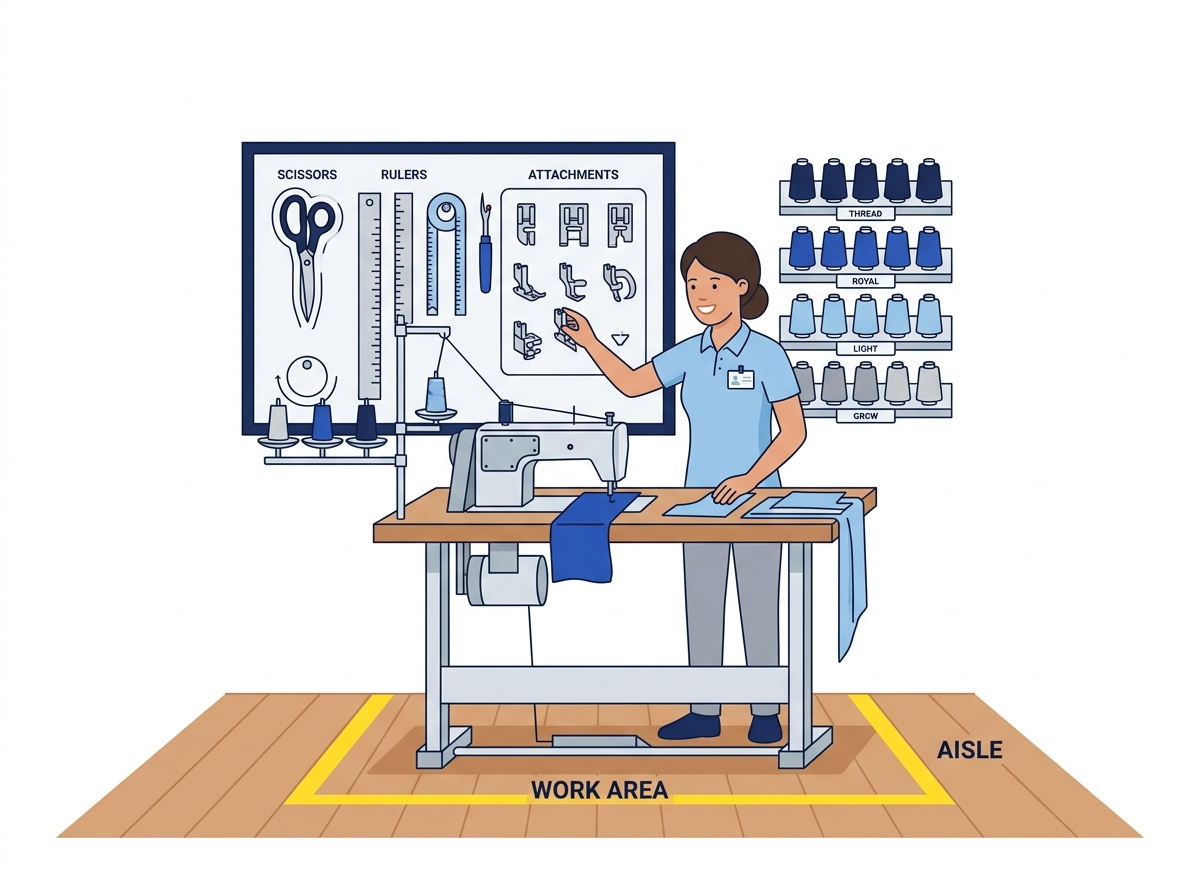
A Place for Everything, and Everything in Its Place
Standardized visual locations so any tool, trim, or work order is accessible in seconds.
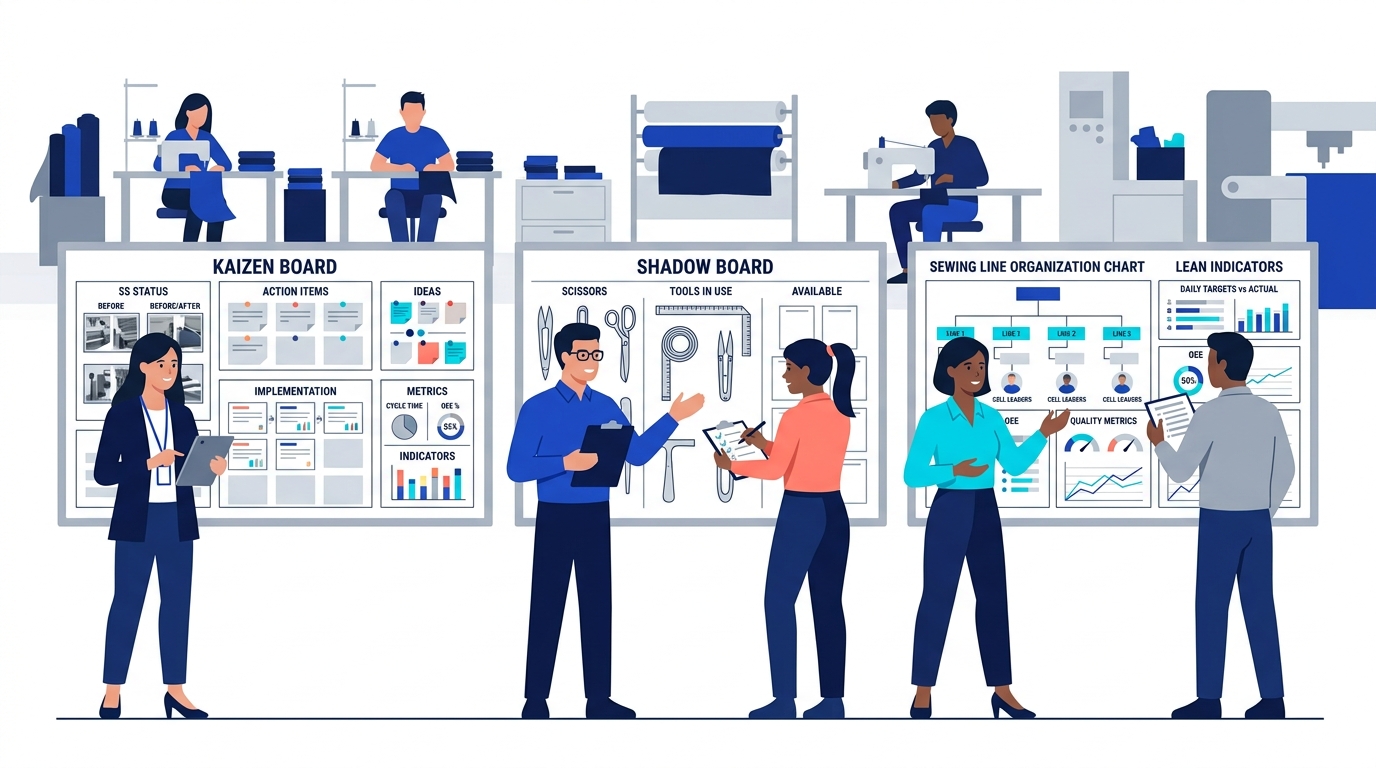
- Workstation Shadow Boards: Exact silhouettes for snips, tweezers, folders, and allen keys.
- Aisle & Zone Demarcations: Clear color-coded floor striping for WIP, finished bins, and gangways.
- 30-Second Retrieval Rule: Zero operator walking waste during production runs.

Cleaning is Inspection: Catch Breakdowns Early
Transform daily cleaning into proactive preventive maintenance for high-speed sewing machines.
- 5-Minute Daily Clean Routine: End-of-shift lint brushing, oil level checks, and needle inspection.
- Fugai Tagging System: Immediate visual tagging of oil leaks, loose bolts, and vibration.
- Defect Prevention: Eliminates oil-spotted garments and costly fabric rework.
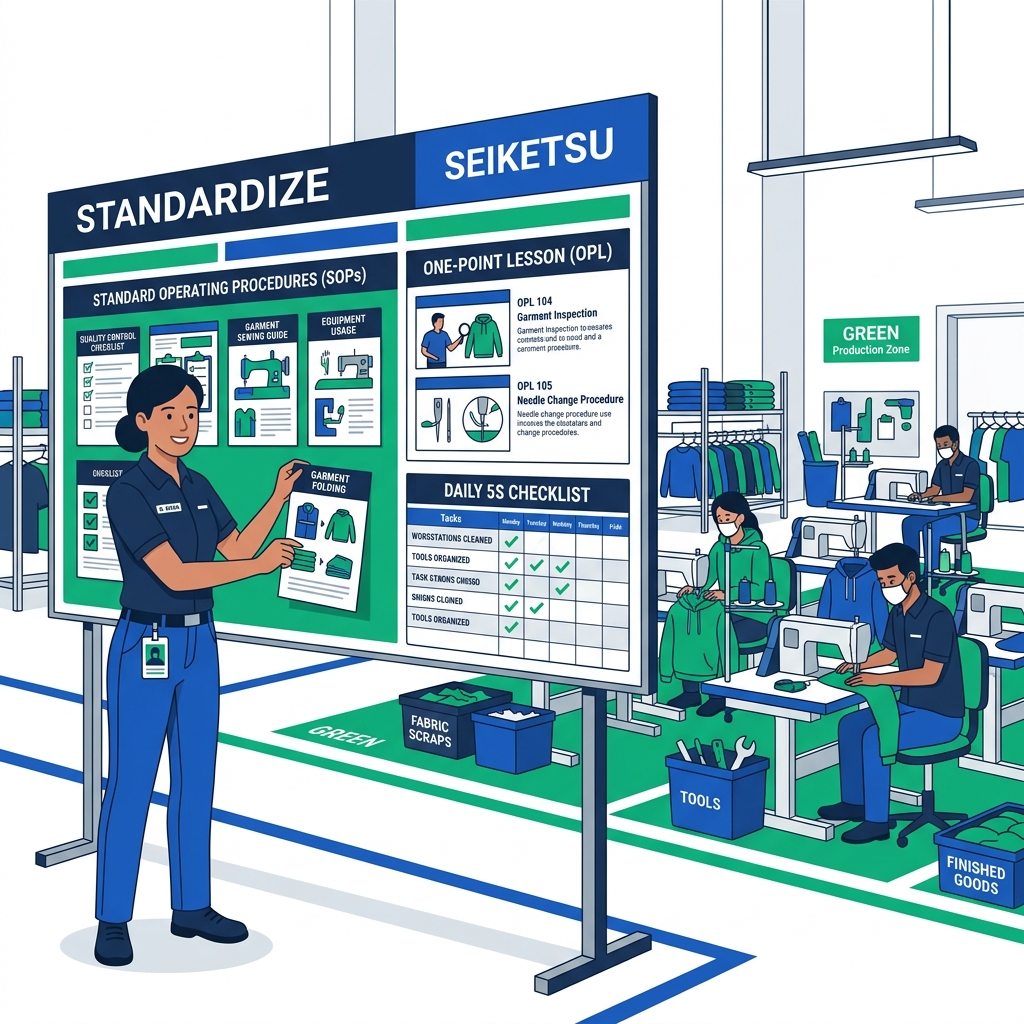
Visual SOPs & One-Point Lessons at Point of Work
Embedding visual standards so deviations are instantly obvious to anyone walking the floor.
- Pictorial Bilingual SOPs: Photo-based guides for station setup, bobbin changes, and quality checks.
- One-Point Lessons (OPLs): 1-page visual standard cards created and maintained by floor supervisors.
- Unified Visual Cues: Standard color tapes for scrap, fabric rolls, quarantine, and inspection.
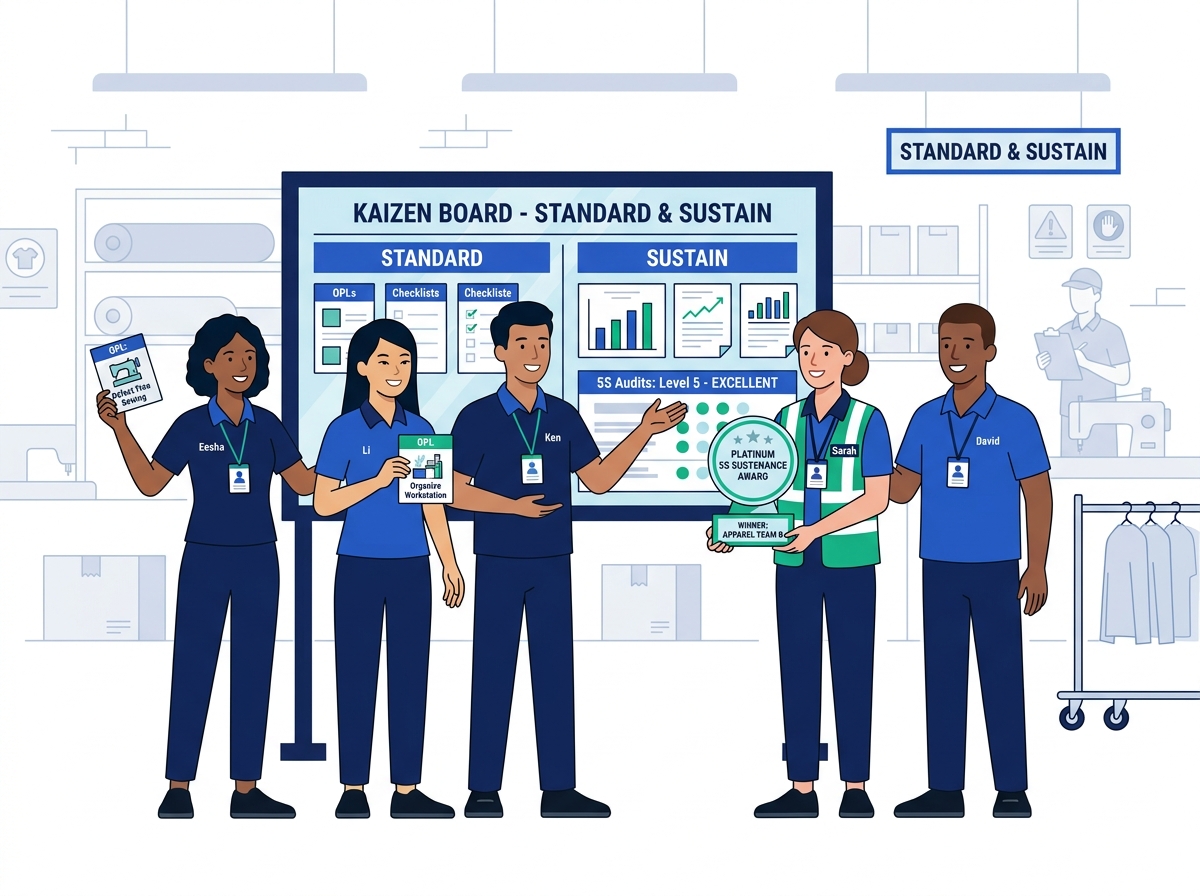
Total Employee Involvement & The Gemba Rhythm
Turning 5S from an administrative chore into everyday habits through gamified recognition and leadership rituals.
- Weekly Peer Audits: Cross-line audits with transparent radar scores displayed on Kaizen boards.
- Total Employee Involvement (TEI): Operators submit continuous improvement ideas directly on the line.
- Platinum Recognition: Monthly rolling trophy, badge ceremonies, and management praise.
Before 5S vs. The New Normal
See the concrete difference between a conventional apparel floor and a Cent Edge certified visual factory.
Before Cent Edge 5S
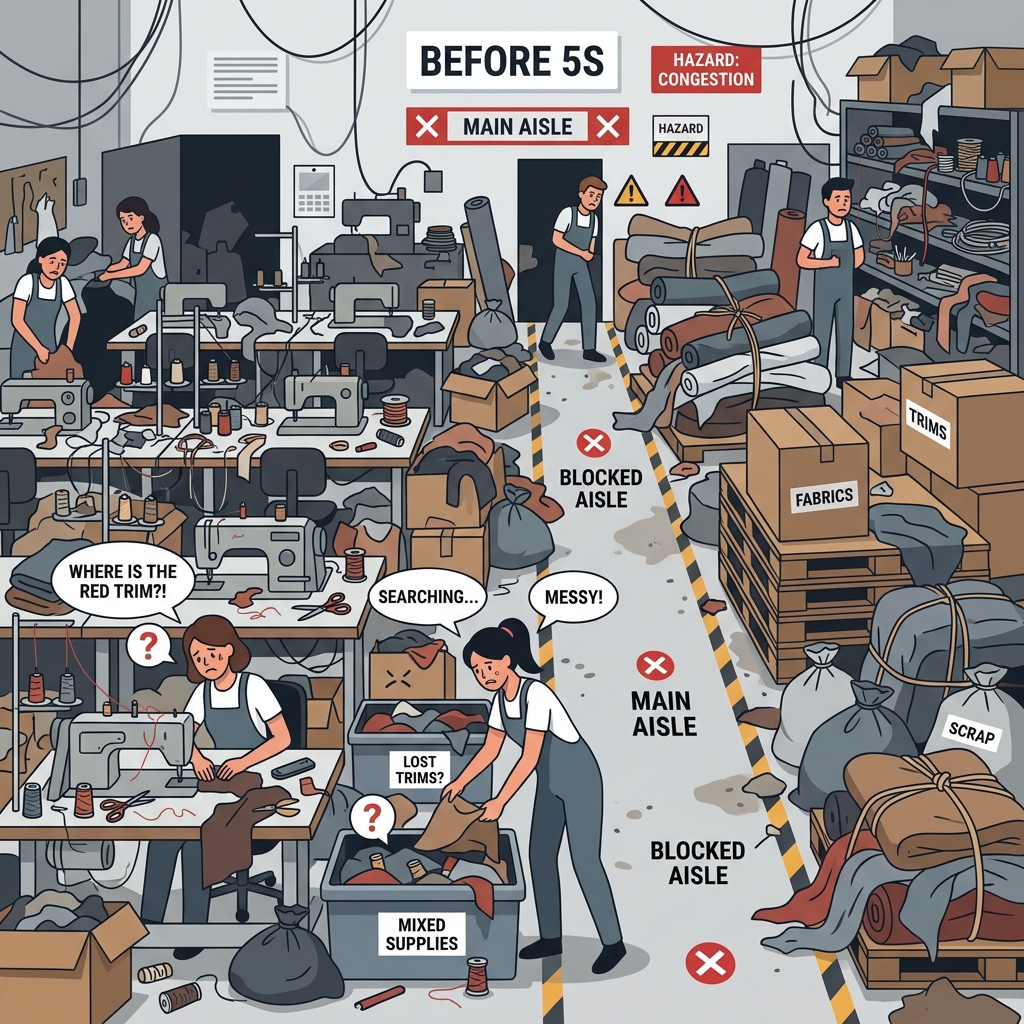
- Gangways cluttered with fabric scrap bags, loose rolls, and pallets
- Mechanics spend 15–20 minutes searching for missing tools and parts
- Lint buildup causes frequent oil spots, needle breaks, and sudden stops
- Buyer audits trigger frantic last-minute cleanups and high stress
- Ad-hoc cleaning drives lose momentum and disappear in 30 days
The New Normal
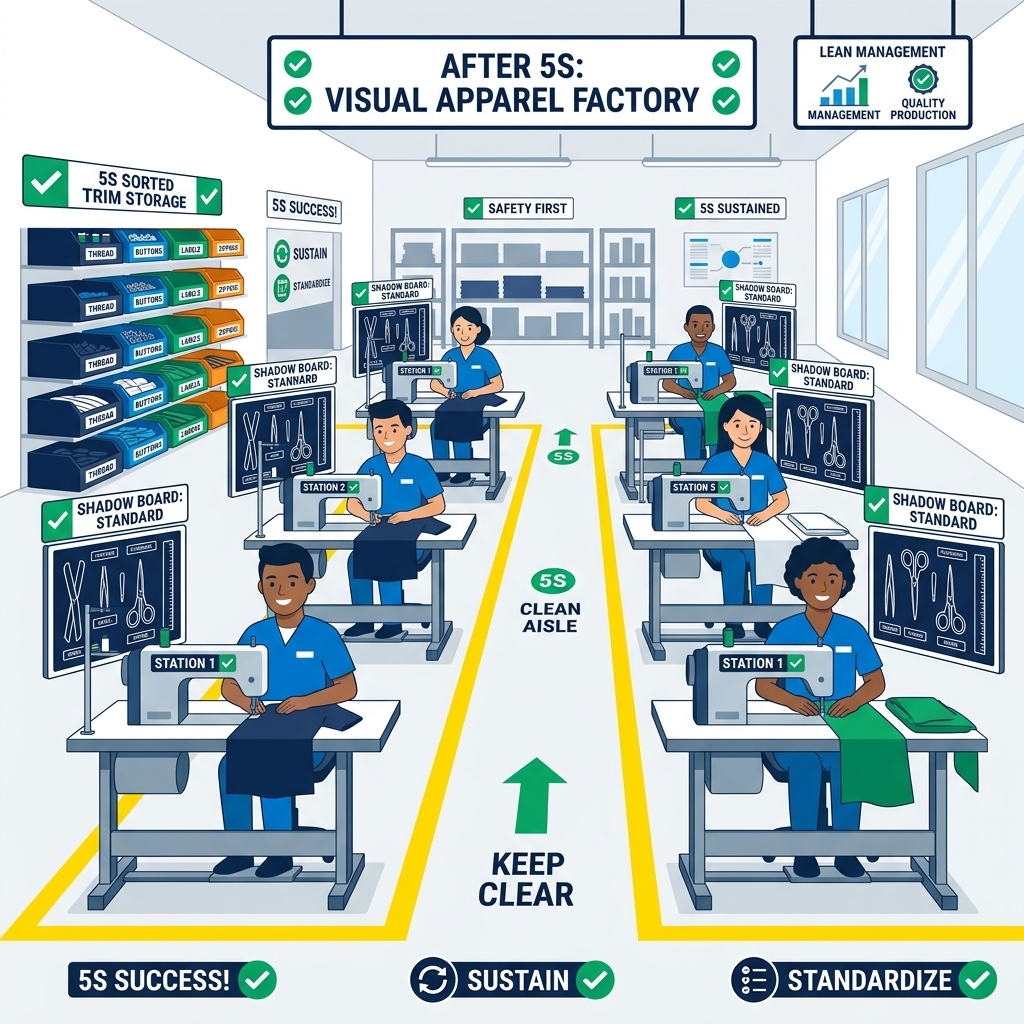
- 100% clear yellow demarcated aisles; seamless bundle cart flow
- Shadow-boarded workstations; any tool or trim retrieved under 30s
- 5-minute daily shine routine prevents machine downtime & oil leaks
- Always "buyer audit-ready" 365 days a year without special preparation
- Self-sustaining culture driven by operator Kaizen and peer audits
The 4-Stage 5S Maturity Roadmap
A structured path taking garment factories from initial floor cleanup to self-sustaining world-class benchmarks.
Basic 5S • Discipline
Initial red-tag drive, floor clearance, removing scrap fabric, and setting basic zone boundaries across cutting and sewing.
Systematic 5S • Order
Installing tool shadow boards, color-coded floor striping, standardized trim bins, and defining zone ownership for all teams.
Visual Factory • Standards
Photo-based One-Point Lessons (OPLs), visual maintenance routines, line Kaizen boards, and daily 5-minute Gemba standups.
Autonomous 5S • World-Class
Self-directed operator teams, cross-functional peer audits, continuous Kaizen submissions, and sustained Platinum audit scores.
The Multi-Tiered Governance Rhythm
5S fails when it's an annual event. Cent Edge establishes a lightweight, non-negotiable rhythm embedded into shift routines.
Shift Gemba Check
Operators clean sewing stations, inspect oil levels, organize thread spools, and verify shadow boards before leaving the line.
Cross-Zone Peer Audit
Supervisors audit adjoining lines using standardized 5S checklists. Results and radar scores are posted immediately on the Kaizen board.
Leadership Gemba Walk
Plant Head and Cent Edge consultants review progress, clear cross-functional bottlenecks, and present the 5S Best Line Trophy.
The Page Industries (Jockey) 5S Platinum Sustenance Model
Our 5S framework is rooted in field-tested execution at industry-leading apparel manufacturing setups, including Page Industries (exclusive licensee of Jockey USA).
By aligning line supervisors, industrial engineers, and operators around transparent visual standards, the facility achieved Platinum Sustenance certification, recovering massive floor space and establishing a global benchmark for apparel shop-floor discipline.
5S is not about cleaning the shop floor once a week; it is about creating a visual workplace where abnormality speaks immediately, and every operator takes pride in their station.